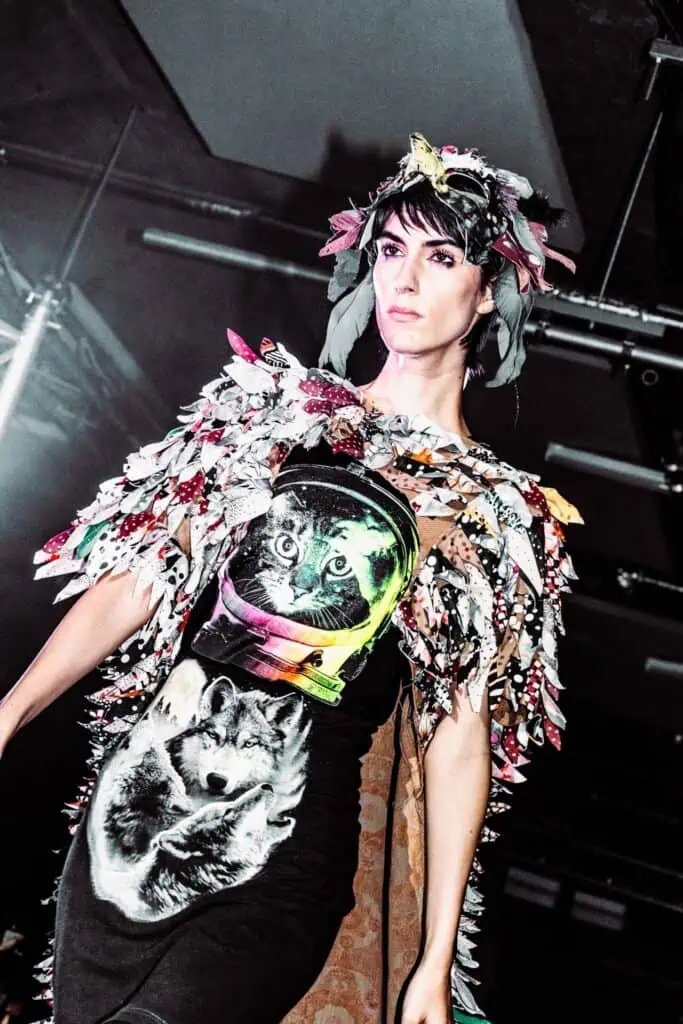
As the sun gives its final gasp one September day, a joyous tale of South American folklore and motherhood begins to unravel. Founded by Colombian-Chilean designer Jennifer Droguett Espinosa, the luxury womenswear brand Anciela focuses on using regenerative techniques to mitigate climate impact. The SS27 season loops in a host of friends who donated fabrics to the collection, like recycled vintage silks, wool offcuts, and cotton. Elsewhere, innovation takes precedent. Think plant-based leather made of grape skins and stalks from Provence, France — the kind that would have otherwise been discarded in the winemaking process.
Spotlighting Latinx creatives is a key part of the Anciela philosophy. On the runway, this manifests as a sonorous live performance directed by Brazilian filmmaker Marie Lanna with Venezuelan artist Luzmira Zerpa. A model offers up both hands skyward in reverence. Donning a soft headpiece resembling a conch shell, she drifts down the tiled floor in a gossamer-thin dress.
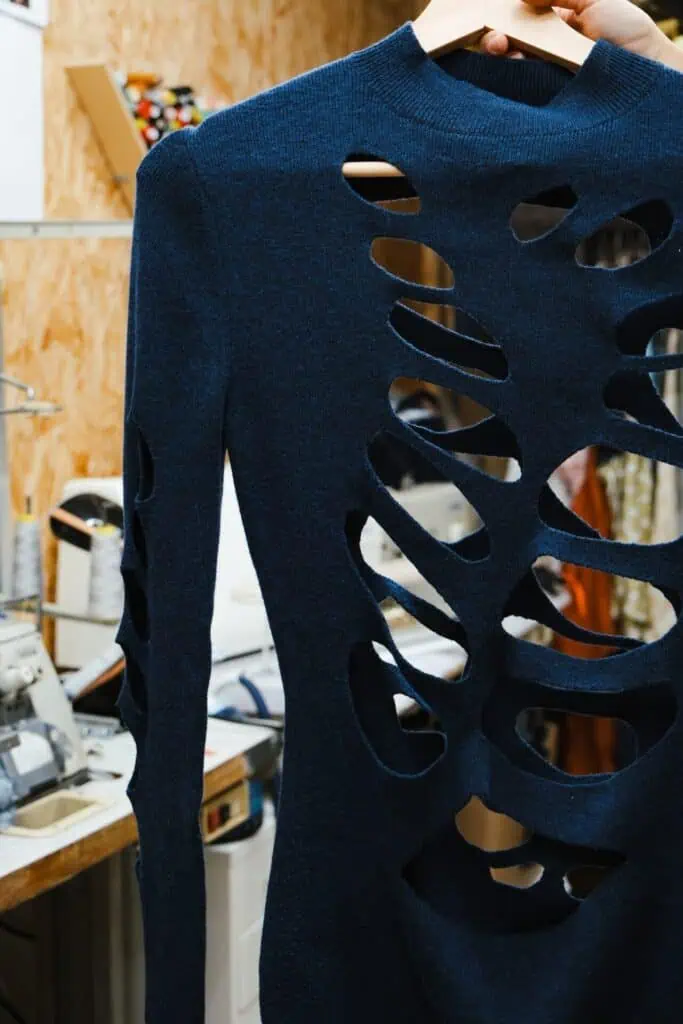
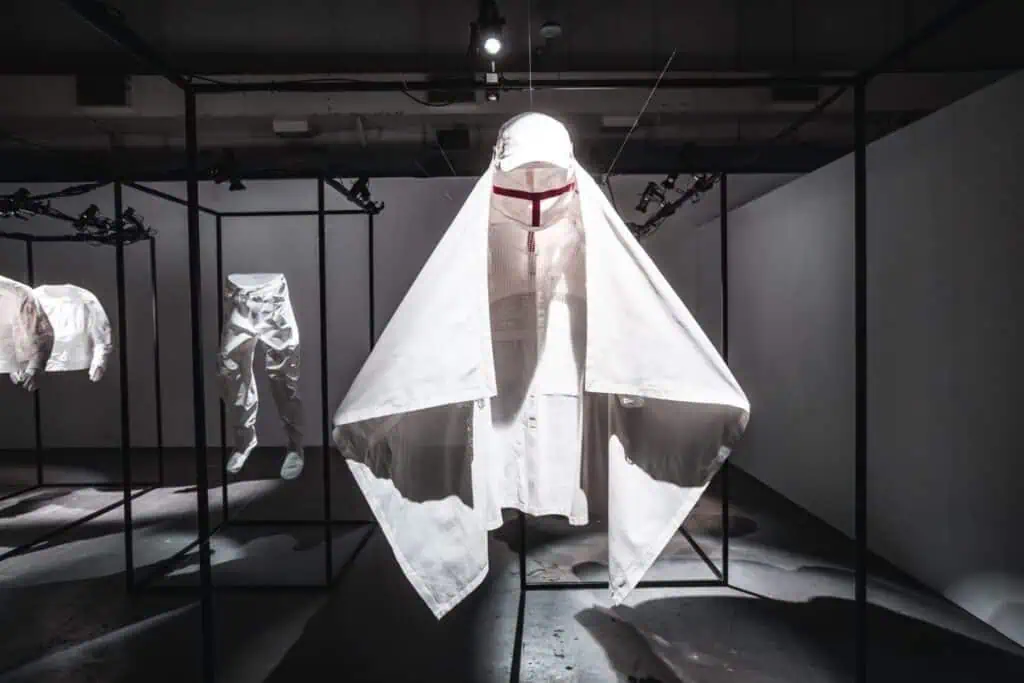
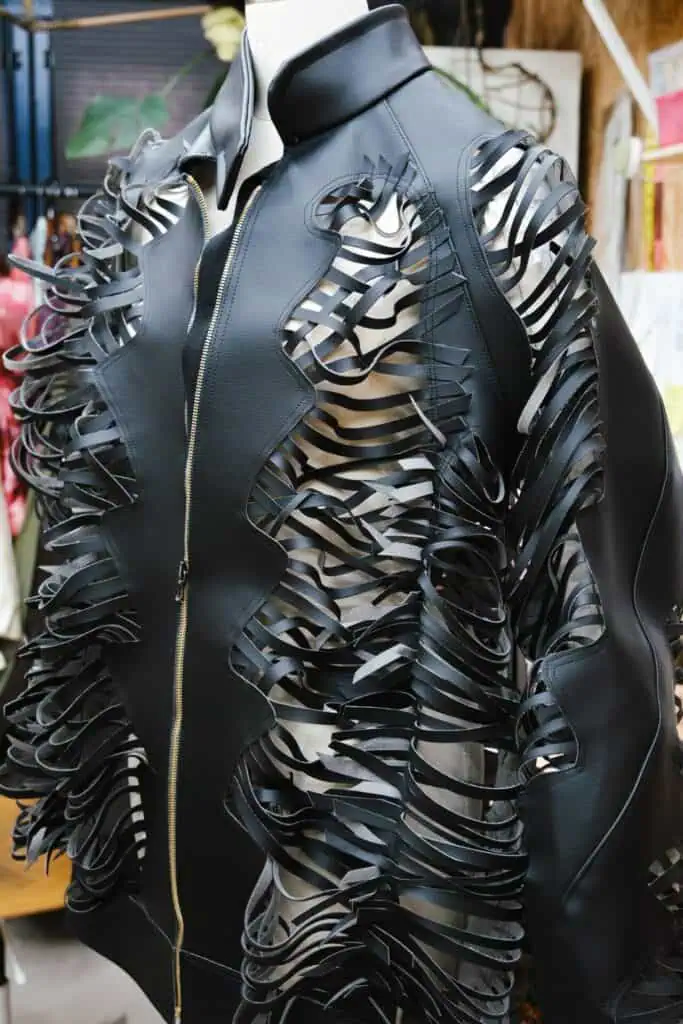
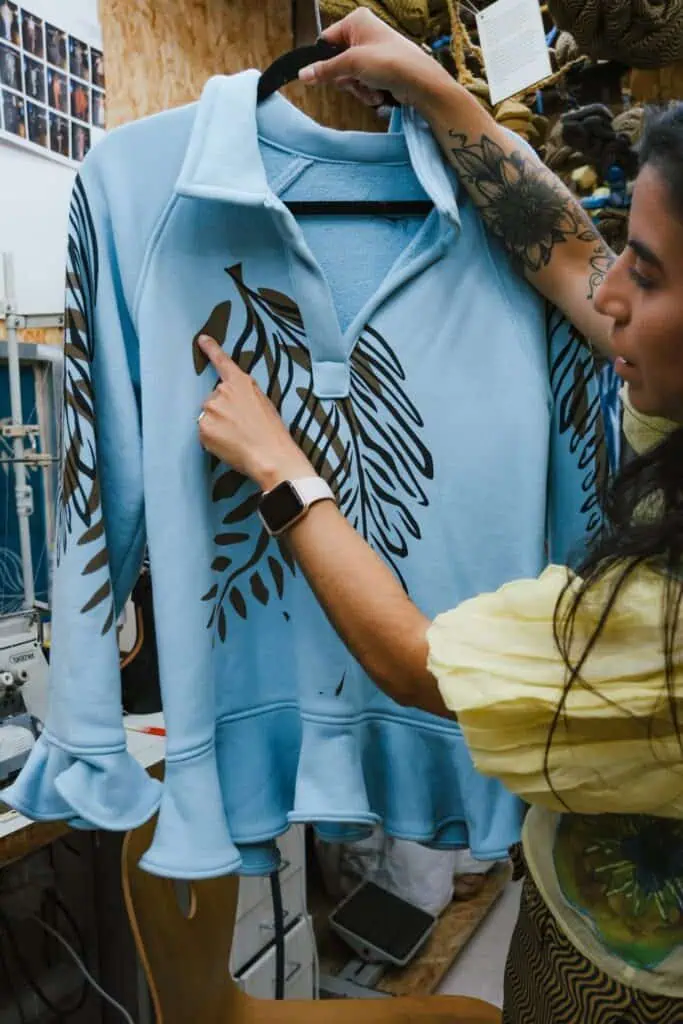
Beyond, the runway was divided into three acts exploring “ancestry, connection, transformation, and regeneration.” Matriarchal figures interacted with their “daughters,” pausing to embrace or share a disapproving glare. Cut-out ribs on a faux leather jacket warp the body into a chaotic silhouette. Fern-printed motifs born from bio-based pigments were studded across knitwear and adaptable clothing. Underscoring the collection was the figurative and literal interpretation of Mother Earth — an enduring presence from birth to death.
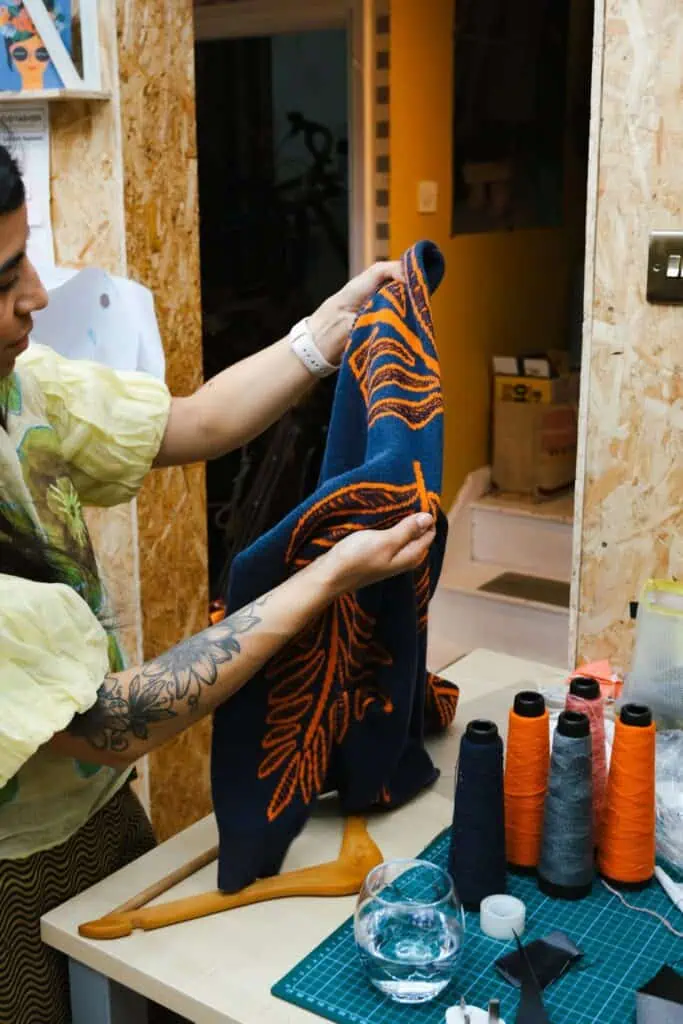
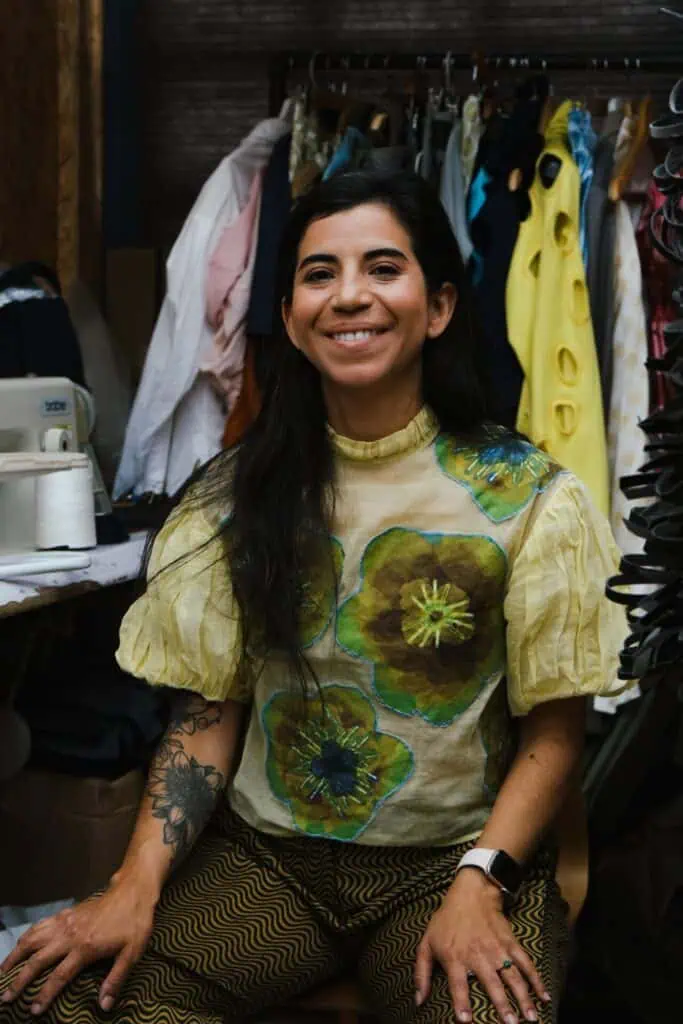
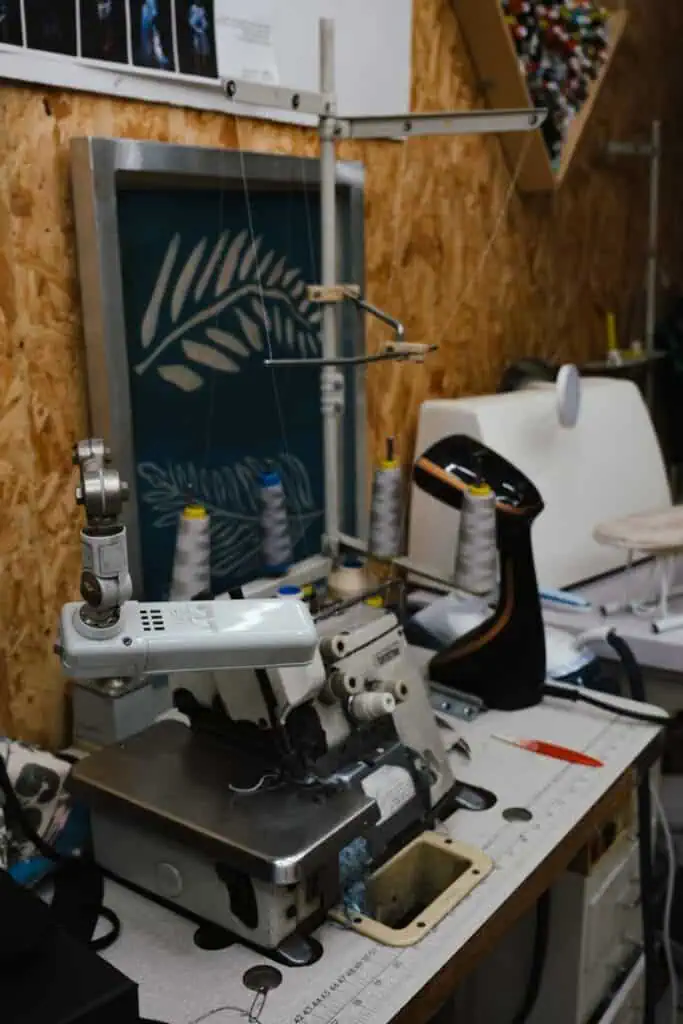
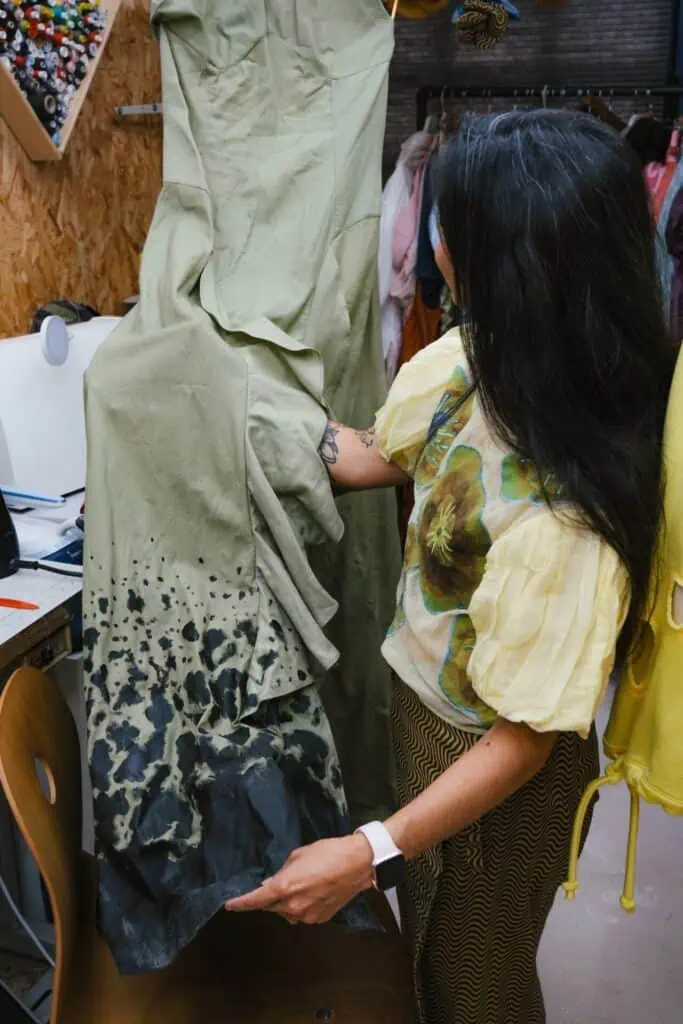
COLD steps into the designer’s studio to get a closer look at the SS27 runway pieces.
The Cold Magazine (CM): How did Anciela come about? What did you feel was missing from sustainable luxury fashion that you could offer?
Jennifer Droguett Espinosa (JDE): Anciela started as a grassroots idea with the aim of bringing more visibility of Latinx culture to fashion, using the brand as a platform to connect with creatives and movements from the diaspora. After working for some years in fashion across Amsterdam, Paris, and London, I realised sustainability wasn’t really on the agenda. Most design teams didn’t really know how the products in the company were being made, and nobody was keen to ask questions beyond price and lead times. I still remember the Rana Plaza tragedy when I was in fashion school and thinking that most of the clothes we wear are made in Bangladesh in those same conditions. I knew that there must be a better way of doing this.
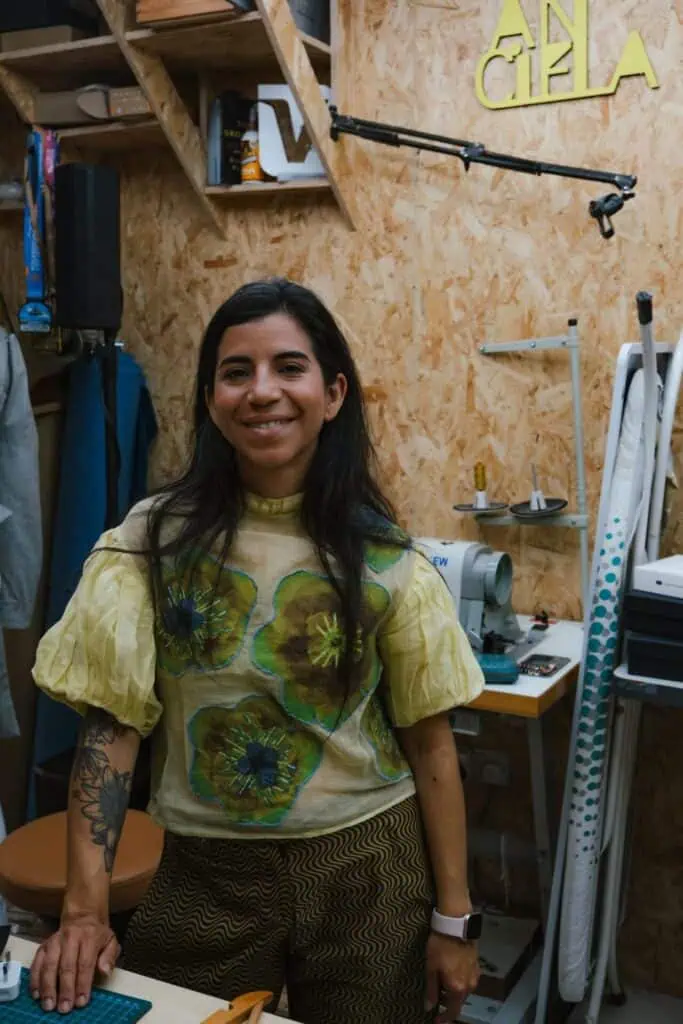
I was very lucky to have my first internship in the haute couture atelier at Viktor&Rolf, where I learned about the care and craftsmanship that goes into making fashion at that level. Even though couture is a small part of our industry there are great lessons to learn from it about how we can slow down and design with more intention and responsibility.
CM: What is the meaning behind the name Anciela?
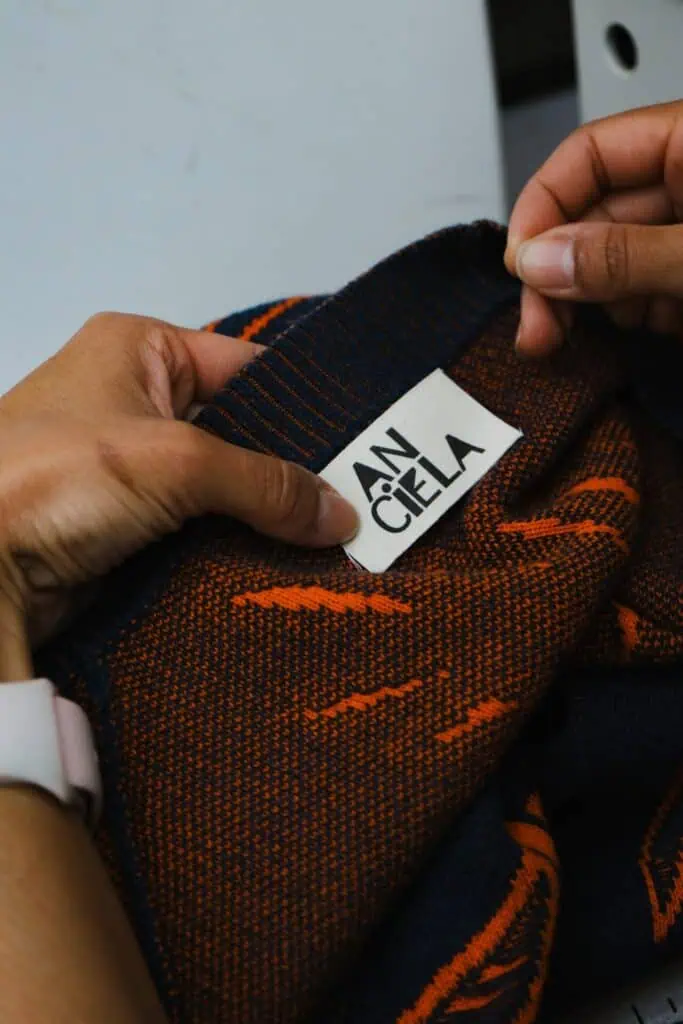
JDE: It’s a made-up name inspired by my Colombian grandparents, Angel and Graciela. They’re no longer with us, but for me it was important to have a name that would always remind me of the brand’s mission. I also like the idea that a brand doesn’t only represent one person but rather a concept that could go beyond and inspire others.
CM: The material collaborations are such a key component of the collection. How did these collaborations come about?
JDE: They came quite organically. Most of the deadstock and vintage materials come by chance from friends and colleagues who know I work with rescued materials. My mentor and friend, Orsola de Castro, connected me to the owner of the 90s brand Allegra Hicks who had no use for her silks anymore. Similarly, Orsola found some rescued fabrics from her own brand Fromnowhere and asked if I wanted to use them.
What I love about these connections is that every material has a backstory, someone who created them with love and wants to find them a home that would give them a second or third life and honour their quality. I also find some materials from platforms like Nona Source, or sometimes deadstock from the theatre or furniture industry.
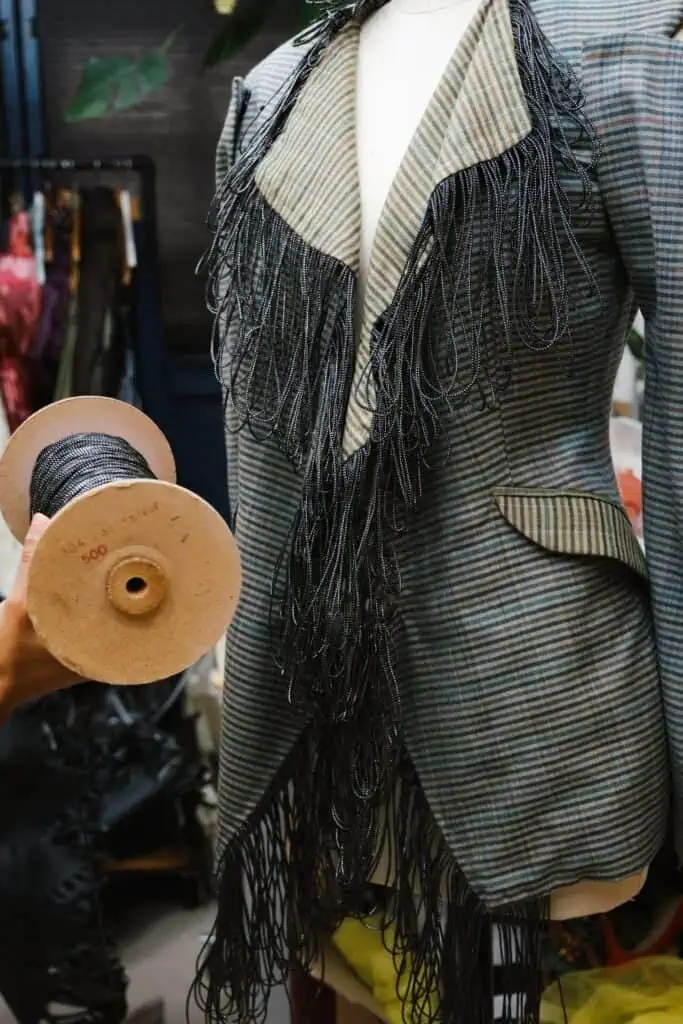
I connected with the material innovators in different ways. I met Cobalt Fashion who created AlgaFila, a yarn made out of algae, last year during the Hong Kong Fashion Summit. I was invited with Anciela to represent the UK and was on the same panel as Roger Chan, their CEO, and as soon as I heard about his material I knew I wanted to use it.
Samantha Mureau from Planet of the Grapes, a company who makes a biomaterial out of grape waste in the wine-making process, also reached out to me. I loved her story and her passion. I also met Octarine Bio during the Global Fashion Summit in Copenhagen this year. I had been looking for a bio-based pigment for a long time so I was excited to try it.
CM: Do you feel your childhood or cultural background contributes to how you approach sustainability?
JDE: Totally. Growing up with very little makes you more resilient and resourceful. I remember upcycling my mother’s clothes and treating every resource as precious before I even knew what sustainability or fashion was. This approach has been fundamental since the beginning of Anciela — making the most out of limited resources and allowing for creativity, while learning new ways of doing business.
CM: How do elements of South American folklore manifest in this collection?
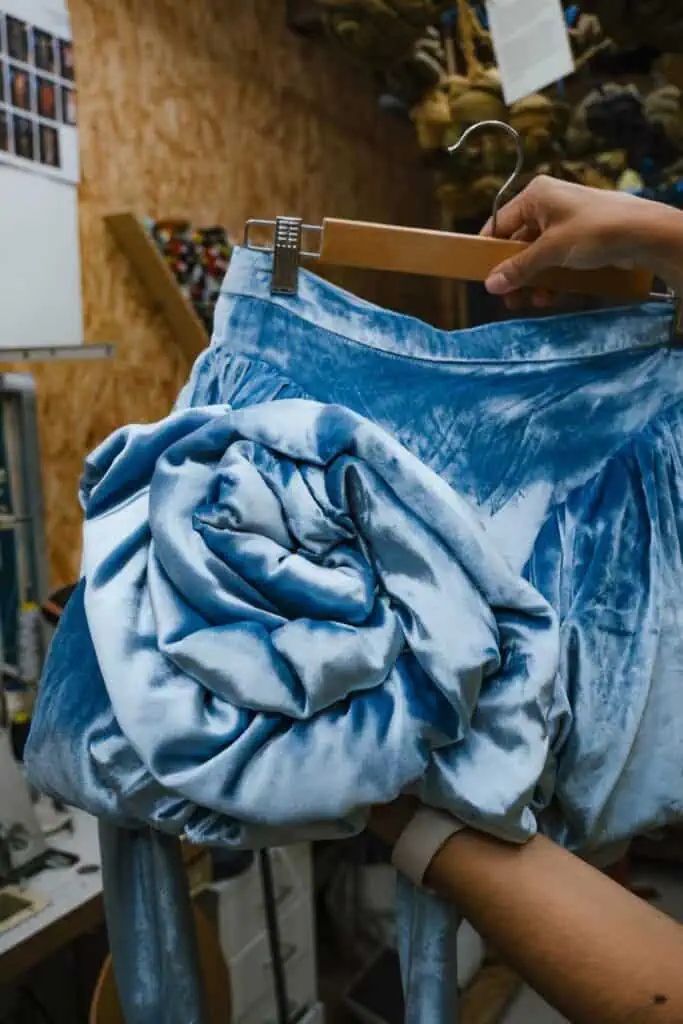
JDE: Lately I’ve been experimenting with no-waste pattern making, and it made me think of geometric shapes and the big skirts of cumbia dancers that are cut in circles. So I introduced this movement and had fun using as much of the total width of the fabric as possible. I also played with the concept of layers and adaptation. There were fern-leaf-inspired raglan sleeves and pleated trousers that mimic leaves moving in the wind. I also used layering for the prints.
CM: Were any of the looks in the collection particularly difficult or joyful to execute?
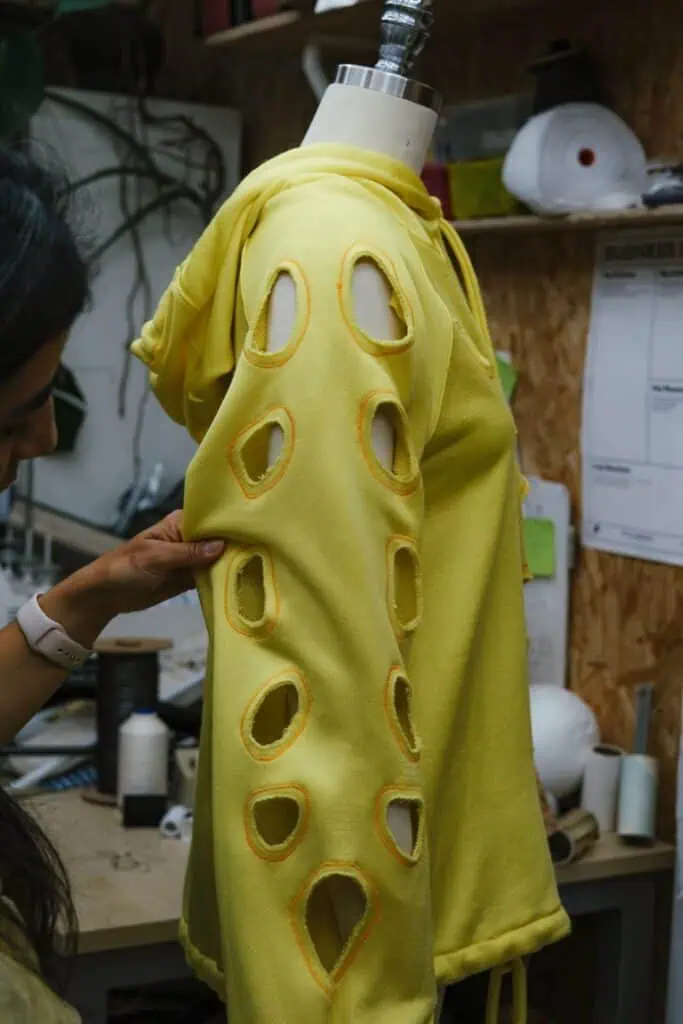
JDE: It’s always a mix of both. Tailoring always comes with complexities, and so does no-waste pattern making. Introducing adaptable pieces that can fit many sizes was particularly difficult. I love to create garments for moving bodies and to celebrate diverse bodies rather than cover them in unflattering big shapes. It requires many fittings and experiments. I particularly loved making the AlgaFila suiting pieces and experimenting with the bio padding for the long silk puffer dress. Working with the grape leather was difficult because it’s very sturdy, so it was tricky to find a way to make it work for garments, but I loved the movement afterwards. It made quite a fun silhouette for the slashed jacket.
CM: Throughout the presentation, we saw matriarchal figures interact with their “daughters” in varying degrees of intimacy and care. Can you explain how you think this represents our collective relationship as humans with Mother Nature?
JDE: I think it’s the perfect metaphor. The sacred bond between a mother and daughter is not something we choose, and it’s a relationship built on care, protection, and knowledge. But it’s also one that carries complexity, tension, and trauma. Mother Earth has all the resources to nourish us but it can also punish us with natural disasters, sometimes caused by our own horrible actions. But within these complicated relationships we must find a balance and a path forward.
Personally, I have a complicated relationship with my mother, so I found it very cathartic. We split the show into three acts to show this range of complexity. Act 1 was about purity, care, and intimate relationships. In Act 2, all the looks were black, with burnt branches I collected from my local park in Lewisham, showing Mother Earth’s lament of fire. We had so many wildfires this year caused by increasing temperatures so we wanted to shine a light on that. And Act 3 was the rebirth after the fire — the hope, how we heal. We brought back colour, happiness, and community.
CM: Musicality felt like an integral part of the presentation and really helped the audience connect with the brand’s story.
JDE: Music is so important to me. It’s a source of inspiration but also a vehicle to feel and process what words sometimes can’t. I worked with Yasmin Rai, who is an artist making music with and from nature sounds while doing research in the climate space. For this show she created the score using data and recordings from wildfires in Latin America from the last three years. I told her about the concept of fires and she happened to be working on a piece with the data; it was meant to be.
The poetry was written by Marie Lanna based on a selection of poems I’ve collected this year about our relationship with the earth and the soil, including works by Violeta Parra and María Loynaz, among others. The voiceover was recorded by Diana Bermudez, a Colombian friend, actor, and activist.
CM: The show closed with a final song where the audience was encouraged to join in and clap along.
JDE: The final song is called “Te quiero ver” by artist Luzmira Zerpa. It’s a song about welcoming someone you love back home. We invited Luzmira to bring the spirit of South American folklore that I remember from growing up. It complemented Yasmin Rai’s composition and made the sound more immersive for the audience. The aim was to gather people in a sense of community and invite them to participate, especially after the darker mood of Act 2. It was important to me to end on a happy and hopeful note.
The Cold Magazine may earn a commission from some links on this page. Learn more